
×
Search
10 Years Ago: JWI Remembers Justice Scalia
Posted on Feb 20 2026
Justice Antonin Scalia
1936-2016
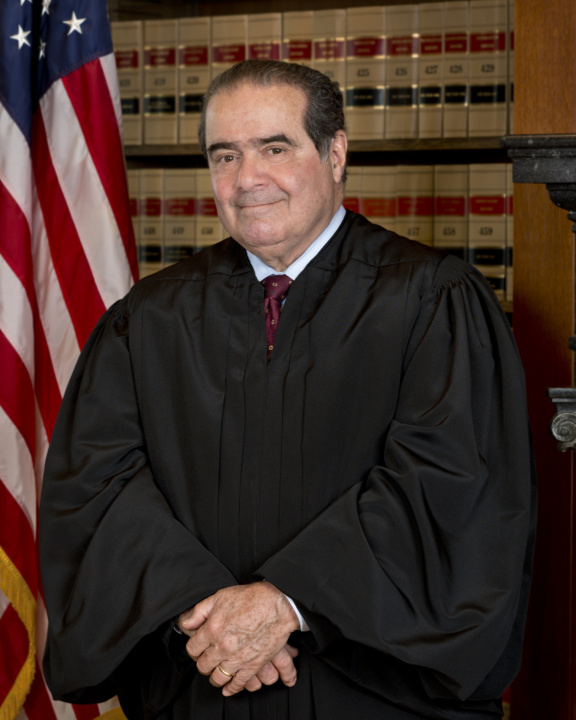
As we mark the 10th anniversary of Justice Antonin Scalia’s passing, we pause to honor the profound and enduring legacy of this extraordinary jurist. JWI Founder and Co-Director Hadley Arkes, who enjoyed a close friendship with Justice Scalia for nearly forty years, shares the following reflections:
February 13 has always been etched in my memory; it was the day that Nino Scalia died in 2016. I can’t believe that it’s ten years since he died, for his vibrant presence just stays with us—especially for those of us who read his opinions again. But his memory has been preserved in a fine law school, with gifted teachers, bearing his name—and who could have known that his death would become a signature element of the 2016 presidential campaign? Mitch McConnell summoned the nerve to keep that seat on the Supreme Court open until after the election, so that the American people could weigh in if they pondered just how much it mattered to them as to the kind of person who take that seat on the Court. And Donald Trump showed the wit of marking, for the public, the kind of jurist in the mold of Justice Scalia he would be seeking, mainly through the lens of the Federalist Society.
We will be sharing here some of the key pieces I wrote when Justice Scalia died. My late wife Judy and I became absorbed, almost adopted, in that enveloping, loving Scalia family; and the bonds of family have remained, on into the next generation.
But as ever, Nino comes back strongly to us in his sharp writing. I’ve just had the occasion to read again his strong dissenting opinion in U.S. v. Windsor (2013) when a bare majority on the Supreme Court contrived an occasion for striking down my own handiwork, the Defense of Marriage Act (1996). I was the author of that bill, which was sparked when the Supreme Court of Hawaii, that year, installed same-sex marriage (Baehr v. Miike). Ads soon went out for couples to fly to Hawaii—and bring their marriage back to the mainland. They would bring it back, that is, through Art. IV, Sec 1 of the Constitution, the Full Faith and Credit Clause. That was the clause that firmed up confidence that the marriage performed in Mississippi would be honored when the couple moved to Massachusetts. The bill would establish that, in federal law, “marriage” would be understood as it had long been understood, as the union of one man and women, confirmed in the commitments of law. The States would still be free to install same-sex marriage under their own laws, but we were trying to firm up the ground on which a State might refuse to recognize a marriage of that kind, coming in from abroad, or from another State. In that same year, Justice Kennedy wrote for the Court in Romer v. Evans, holding in effect that it was no longer legitimate for a State to incorporate in its laws an adverse moral judgment on the homosexual life. With that stroke, the Court removed the grounds on which a State could refuse to honor a same-sex marriage coming in from another State. Something needed to be done to prop up the authority of a State to make that moral judgment in its laws.
It took 17 years before a slim majority in Windsor could contrive, as I say, a case in which it could cast a judgment on that Defense of Marriage Act. And it was done as Anthony Kennedy played the role of the swing judge. He would swing away from all of his conservative colleagues and join Justices Breyer, Ginsburg, Sotomayor, and Kagan. Chief Justice Roberts would be in dissent, along with Justices Scalia, Thomas, and Alito. The Chief Justice sought to make the point that this decision, overturning the defense of “marriage”, as we had known it, did not itself establish a right to same-sex marriage. But Justice Scalia, as the voice of hard realism, spoke the candid truth here. “In my opinion,” he wrote, “the view that this Court will take of state prohibition of same-sex marriage is indicated beyond mistaking by today’s opinion.” For Justice Kennedy was drawing on his earlier in opinions in Romer v. Evans and Lawrence v. Texas that the aversion to the homosexual life, expressed in the law, could not spring from reasons, but from an irrational “animus.” The people who drafted and voted for the Defense of Marriage thought they were seeking to secure the only form of marriage they found morally coherent and defensible. But for Kennedy the legislation revealed nothing more than the motive to “demean those persons who are in a lawful same-sex marriage” and to impose “a disability on [this] class by refusing to acknowledge a status the State finds dignified and proper.”
With all of that in hand, Scalia thought that the script had been written. “[T]he real rationale of today’s opinion,” he wrote, “is that DOMA is motivated by ‘bare . . . desire to harm’ couples in same-sex marriages. … How easy it is, indeed how inevitable, to reach the same conclusion with regard to state laws denying same-sex couples marital status.” Almost any of the quotable passages in the opinion could readily lead to the same conclusion—as, for example, DOMA’s history. “This state law’s principal effect is to identify a subset of state-sanctioned marriages constitutionally protected sexual relationships … and make them unequal. The principal purpose is to impose inequality, not for other reasons like governmental efficiency. Responsibilities, as well as rights, enhance the dignity and integrity of the person. And through DOMA this state law contrives to deprive some couples married under the laws of their State enjoying constitutionally protected sexual relationships, but not other couples, of both rights and responsibilities.”
There was nothing more that needed to be said. “As far as this Court is concerned,” wrote Scalia, “no one should be fooled; it is just a matter of listening and waiting for the other shoe [to drop].” It would take only two more years for that other shoe to drop in Obergefell v. Hodges. But Nino chose to read his dissent that day, and in a style that was so distinctly his, he caught the center of the problem in this way: “It is one thing for a society to elect change; it is another for a court of law to impose change by adjudging those who oppose it hostes humani generis, enemies of the human race.” I was seated that day in one of the box seats of the Court, and Maureen Scalia was just ahead of me in another of the seats. As we walked out of the courtroom together I told her that we can walk out, that day, with heads erect, not demoralized, not shaken in our convictions, because Nino had read that dissent.
Hadley Arkes
February 18, 2026
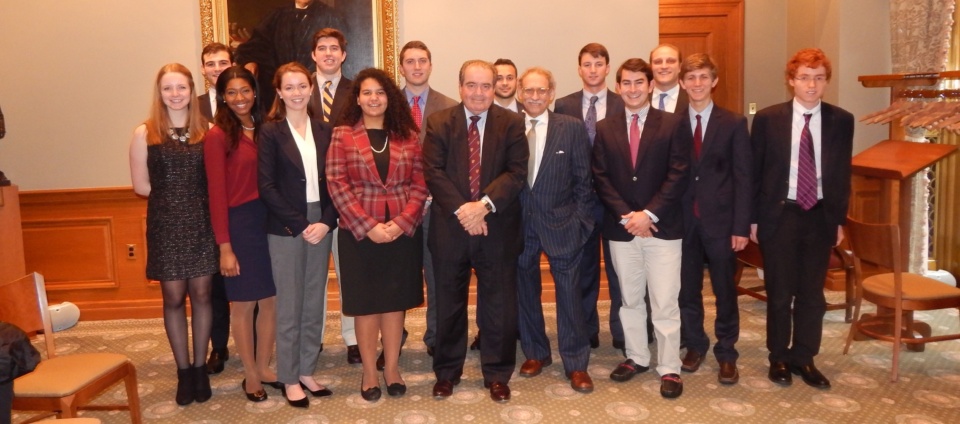
Justice Scalia with Prof. Arkes and students from Amherst College at the Supreme Court, January 2015
Articles: Hadley Arkes on Justice Scalia
- "Memories of Nino" - Days after Justice Scalia's passing, Prof. Hadley Arkes shares in First Things his favorite memories of their friendship.
- "Antonin Scalia: A Spirited Life in the Law" - In National Review, Prof. Arkes compliments Justice Scalia on his well-founded views on the law, reminding readers of the Justice's humor and logic which were always intertwining in his opinions and eventually solidified his long-lasting role on the Court.
- "Symposium on Justice Scalia" - For Law & Liberty, Prof. Arkes contributed a series of remembrances of the justice, lamenting the loss of one of the greatest to ever sit on the United States Supreme Court.
Friends of Nino: A Tribute to Justice Scalia
A short time after his passing in 2016, Prof. Hadley Arkes was joined by Prof. John Baker, Paul Clement, Noel Francisco, Gene Schaerr, Prof. Michael Uhlmann, and Edward Whelan to collect further memories of the justice, both personal and jural. Watch a recording entitled "Friends of Nino" as we remember Justice Scalia's legacy today.
×